Fuel from thin air: How electrochemistry could shape the future
Science Victoria Edition


BSc Advanced - Global Challenges (Hons), Monash University
Climate change, the greatest challenge we face in sustaining the health and future of our planet, is caused our use of fossil fuels and the huge amount of carbon dioxide (CO2) this emits [1]. Imagine if we could capture the CO2 we generate and reuse it? What if today’s release of carbon became a resource for tomorrow? Such a breakthrough to help shrink our carbon footprint may be brewing in an Australian laboratory…
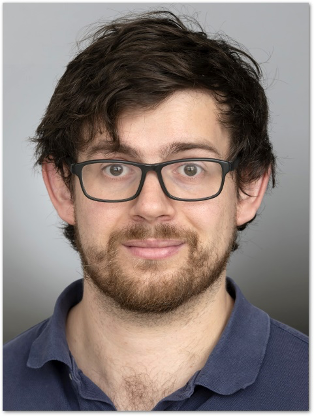
Meet Dr Cameron Bentley, senior lecturer in the School of Chemistry at Monash University. He leads a research team which is addressing these challenges using a technology known as electrochemical CO2 reduction which holds the potential to close the carbon cycle [2].
“Instead of releasing CO2 into the atmosphere and adding to the problem, using this technology CO2 could, in principle, be captured and recycled again… from waste product into a resource.”
Cameron is not the only one who views CO2 electroreduction as a potential way of reaching net zero while maintaining the use of liquid fuels.
Alli et al. (2025) also claim that, undertaken on a macroscale, CO2 electroreduction could provide a transformative opportunity to shift to a circular carbon economy.[3]
So what is ‘electrochemical CO2 reduction’?
The clues are in the name: ‘electrochemical’ refers to a chemical process that involves using electricity, and ‘reduction’ to a reaction where a molecule gains negatively-charged electrons.
“We are using electricity to ‘recycle’ carbon dioxide into something useful,” Cameron says. “CO2 is a very stable molecule, so it doesn’t want to react easily. But if we supply energy in the form of electricity, we can drive it to transform into other chemicals - including back into fuels!”

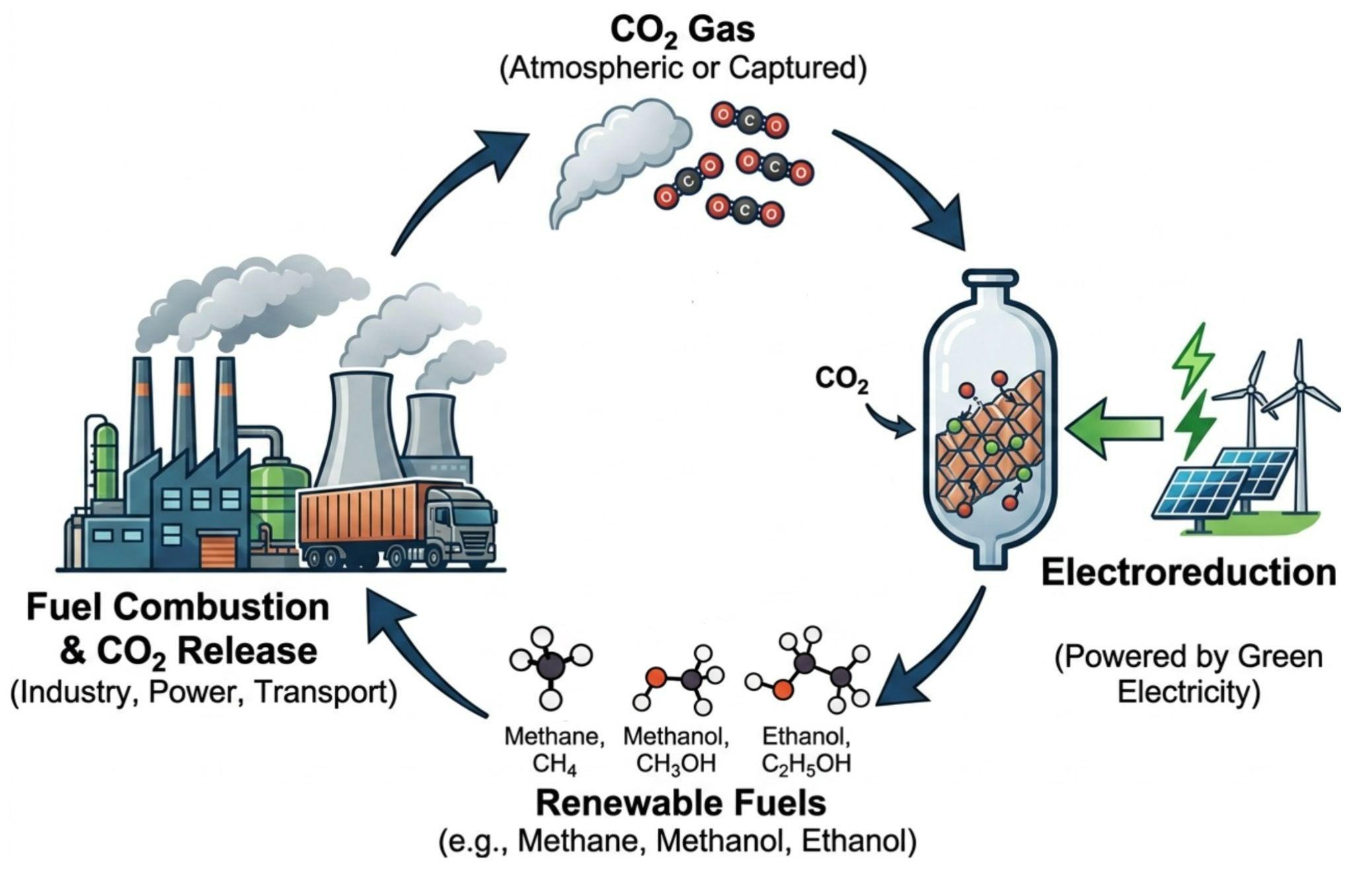
This reaction requires a catalyst, an additive that helps it to occur, but is not itself used up. At the surface of this electrocatalyst, electrons are transferred to CO2 molecules, helping drive their transformation into new chemical products[4].
What sets this research apart?
Electrochemical CO2 reduction technology is not novel per se; many research groups globally have been working on it for several years. But most current systems struggle with making their process efficient and scalable, which limits their economic viability [5]. So, many researchers focus heavily on improving the overall performance of their system, attempting to make it faster or more efficient. By contrast, Cameron Bentley and his team aim “to zoom in”, and study the reaction at the nanoscale.
“Our goal is to move away from a ‘trial-and-error’ approach and towards a more rational design of electrocatalysts, where we understand exactly which sites are doing the chemistry and why,” Cameron says.
Central to this approach is a technique called Scanning Electrochemical Cell Microscopy (SECCM), which uses a tiny probe to measure electrochemical reactions at highly localised regions of a material. This technology did not originate in Cameron Bentley's lab. It was originally developed by Professor Patrick Unwin’s group at the University of Warwick in the UK, where Bentley spent four years as a postdoctoral researcher. In was there he became heavily involved in further development and application of the technique and then brought that expertise back to Australia and built his own research program around it.[6]
Conventional SECCM has an important limitation. Although it can reveal where electrochemical activity is occurring, it cannot directly identify the chemical products being formed at each location. Bentley’s current research aims to overcome this by developing a new generation of chemically sensitive, multifunctional, nanoscale probes, which he describes as a “lab-on-a-tip.” The goal is to combine the exquisite spatial resolution of SECCM with additional chemical information, allowing researchers to determine not only where reactions occur, but what is being produced.
What has SECCM revealed?
In 2024, Bentley’s team used SECCM to study the naturally occurring mineral molybdenite, chemically molybdenum disulfide (MoS2), a useful catalyst for electrochemical CO₂ reduction. Using their technique, they were able to compare the electrochemical activity of different regions of a MoS2 crystal directly at the nanoscale.
The results showed a striking contrast. The smooth, flat surfaces of the MoS2 crystal, known as the basal planes, showed relatively low electrochemical activity, while the defects, where the edges were exposed, showed substantially higher activity. Certain types of these defects also showed enhanced activity specifically in the presence of CO2 as opposed to an inert atmosphere, providing indirect evidence that these sites are particularly active in electrochemical CO2 reduction.
“One attractive feature of MoS2 is that it is composed of relatively abundant elements, particularly compared to catalysts involving precious metals,” Cameron explains. “But abundance alone doesn’t make something commercially viable — activity, selectivity, stability and the overall process efficiency all matter.”
The significance of the finding, he says, lies in what it reveals about how catalysts work at extremely small scales. “What was exciting for us was being able to actually see that different parts of the same material behave completely differently. If you only measure the whole catalyst, all of that information gets averaged together. At the nanoscale, we could identify specific structural features associated with enhanced electrochemical CO2 reduction activity. That gives us a potential design rule: rather than simply making greater amounts of MoS2, can we make MoS2 with more of the sites that actually do the useful chemistry?”
This result demonstrates the kind of “bottom-up” insight Bentley’s approach is built around: rather than guessing at better catalyst recipes through trial and error, researchers can identify specific features associated with useful electrochemical activity and use that knowledge to guide future catalyst design. Importantly, this work was performed using conventional SECCM and highlighted its limitations. “That’s really the next frontier for us.”
Cameron’s future studies are aimed at developing the chemically sensitive nanoscale “lab-on-a-tip” — which can simultaneously resolve both electrochemical activity and local chemical information.6
What stands in the way?
Dr Bentley’s unique methods of research stem from a need to know about many different things at once. As you have probably guessed, electrochemical CO2 reduction is an inherently complex reaction. It is capable of producing many products, which makes it very difficult to study and control. “The challenge is to get the product we want, rather than a messy mixture of many different things.”
The reduction reaction is like cooking several dishes in the same pan at the same time, where all the ingredients mix and it becomes nearly impossible to end up with anything remotely edible. Furthermore, beyond these chemical challenges, there are still engineering difficulties involved with building a viable reaction system that is efficient, selective, stable over long periods and economically scalable. “While the concept is promising, bridging the gap from lab-scale experiments to something that works economically at scale is a major ongoing challenge,” Bentley admits.
At present, gaining an in-depth understanding and “improving (the) fundamental electrochemistry” is still the main priority. Moving towards commercialisation will require advances on multiple fronts: “It’s a multidisciplinary challenge that spans chemistry, materials science, and engineering,” which in turn, “makes it a very exciting space to work in”.
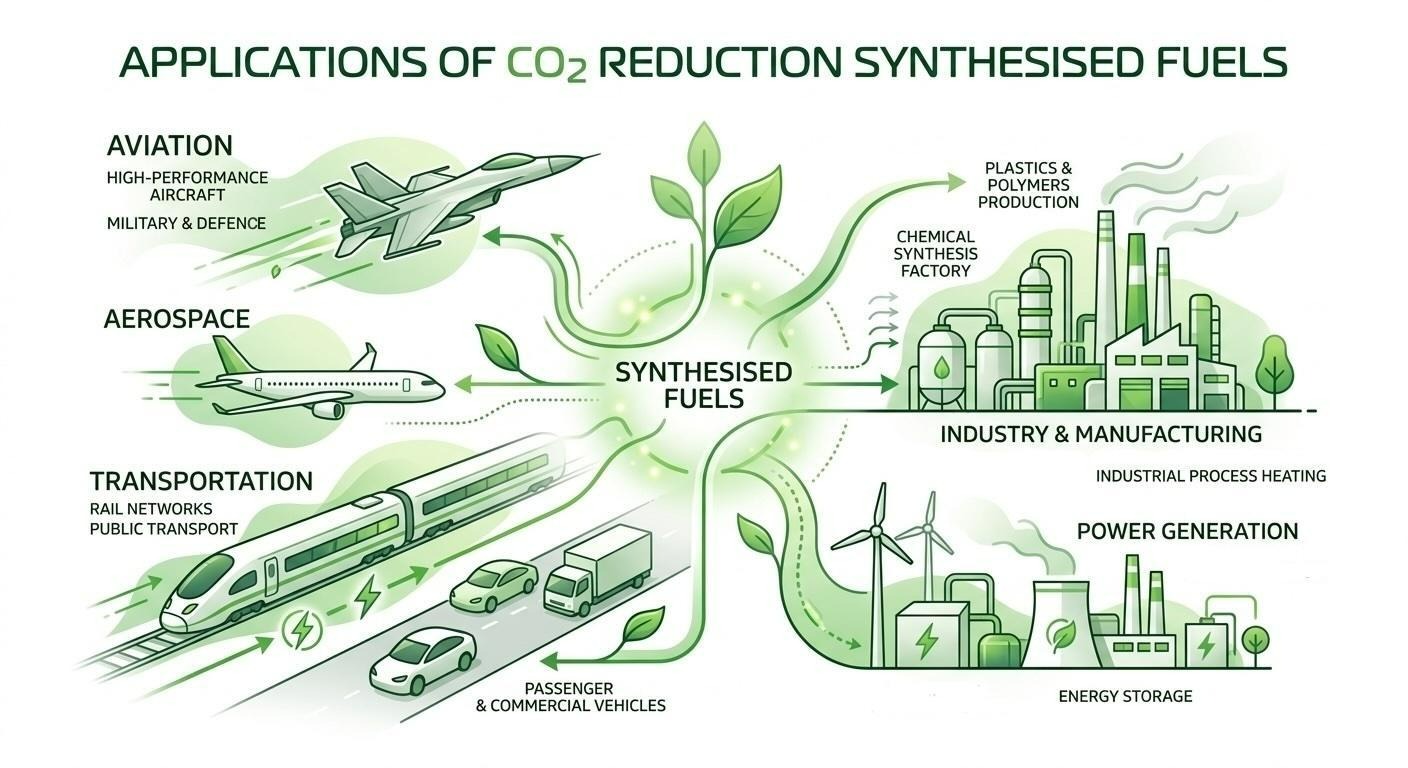
While the technology is hardly a complete solution to the problem of climate change, Cameron Bentley is confident in its potential as an important cog within “a broader strategy to reduce emissions and move towards a more sustainable energy system… where different technologies play to their strengths”.
It is difficult to electrify industries such as long-distance freight, defence and aviation. But the pressure to meet fast-approaching net-zero targets fosters a need to maintain sustainable liquid-fuel technologies [7]. The chemical industry also has a large vested interest in the theoretical generation of important chemicals such as carbon monoxide, methanol, and hydrocarbons [8]. So the potential pay-off is huge.
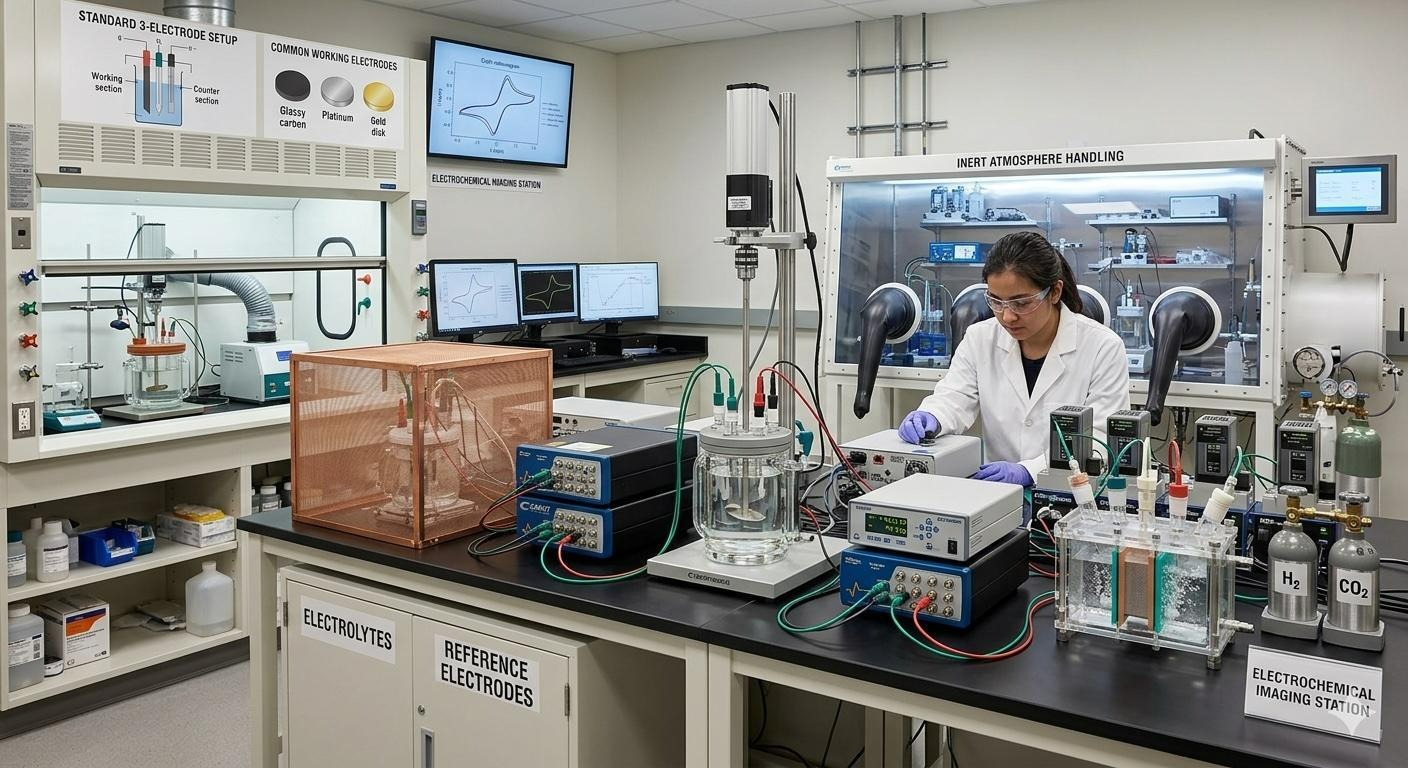
Cameron Bentley's approach has recently been backed by the Australian Government. In 2025 he was awarded an Australian Research Council Future Fellowship worth close to $1 million to develop a new generation of the multifunctional lab-on-a-tip electrochemical imaging tools.
Importantly, the technology is applicable to much more than CO2 reduction. The same approach can provide insights into a wide range of electrochemical reactions and materials, with the broader goal of understanding how nanoscale structure and chemistry determine performance in emerging energy technologies.
Want to hear more about applied science in Victoria?
subscribe.rsv.org.au
References
[1] Environmental and Energy Study Institute, (2021). Fossil fuels. https://www.eesi.org/topics/fossil-fuels/description
[2] Cameron Bentley, (2016). Monash University. https://research.monash.edu/en/persons/cameron-bentley/
[3] Alli, Y. A. et al., (2025). Perspectives on the status and future of sustainable CO2 conversion processes and their implementation. Carbon Capture Science & Technology 16: 100496–100496. https://doi.org/10.1016/j.ccst.2025.100496
[4] Jeyachandran, N. et al. (2023). Cutting-edge electrocatalysts for CO2RR. Molecules 28 (8): 3504. https://doi.org/10.3390/molecules28083504
[5] Chen, B et al. (2024). Performing electrocatalytic CO2 reduction reactions at a high pressure. Carbon Neutrality 3 (1). https://doi.org/10.1007/s43979-024-00106-7
[6] Limb, J. et al. (2024) Structure-dependent CO₂ reduction on molybdenite (MoS₂) electrocatalysts. Chemical Communications 60 (36): 4781-4784 https://doi.org/10.1039/d4cc00496e
[7] Gray, N. et al. (2024). The role of direct air carbon capture in decarbonising aviation. Renewable & Sustainable Energy Reviews 199: 114552–114552. https://doi.org/10.1016/j.rser.2024.114552
[8] BioLogic Learning Center. (2024). What is CO2 electrolysis? https://www.biologic.net/topics/what-is-co2-electrolysis/
[9] Banner image by Mark Olsen from Unsplash
Other articles of interest






Discover how you can join the society
Join The Royal Society of Victoria. From expert panels to unique events, we're your go-to for scientific engagement. Let's create something amazing.