Our Unseen Coastal Climate Threat
Science Victoria Edition


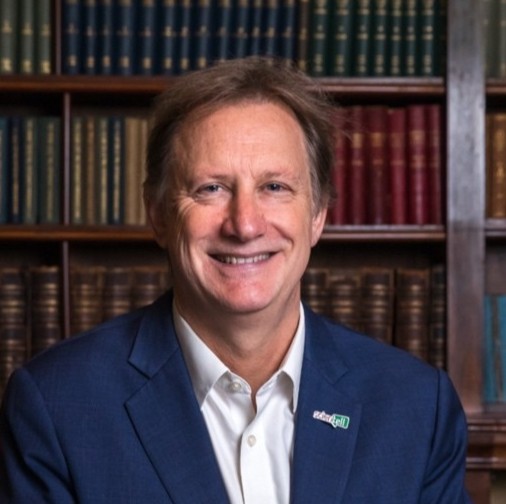
CEO and Director, Scientell & former member, Victorian Marine and Coastal Council
Coastal connection
In 2025, the Victorian Marine and Coastal Council (VMaCC) ran Wave 6, the sixth survey of community opinions about the coast undertaken since 1996.
The results, released earlier this year, show that nearly four in five of those surveyed had visited a Victorian coastal area in the past year. And nine in ten visitors came away satisfied. Three-quarters agreed that coastal and marine environments are Victoria’s most important natural feature.
Victorians visit the coast for natural beauty, peace and quiet, walking, socialising, sightseeing and time with family and friends. Six in 10 prioritised natural beauty and relatively untouched environments over tourism and recreation.
And they want those environments looked after. Nine in ten supported using the marine environment as protected areas for animals and plants – more strongly than any other use, including tourism. Seventy-two per cent agreed that more needs to be done to help coastal and marine environments to adapt to climate change.
Coastal concern
But such environmental concern is strongly shaped by what people can see. When respondents were asked which pressures have a very high impact on the marine and coastal environment, pollution (rubbish, plastics and microplastics) stood out. Less visible changes – for instance, climate-related pressures, such as ocean warming, and the storms and floods they bring – are harder for many people to recognise and flag as of concern. When asked which issues are most important to address, survey respondents put pollution first at 48%, with ocean warming a distant second at 23% and sea-level rise at 18%.
There was one exception: people who live within a kilometre of the coast and visit it more often. They placed more importance on ocean warming (30%) and beach erosion (29%) than other Victorians.
Nonetheless, this general lack of concern for the seemingly invisible could lead to a lack of action to protect vulnerable environments.
Kelp forests along Victoria’s coast, for instance, are warming about four times faster than the global average.
Victoria’s official planning figure of 0.82 m of sea-level rise by 2100 is 15 years old. It sits below the current Intergovernmental Panel on Climate Change projections of more than a metre. Modelling led by Professor Tom Kompas of The University of Melbourne at the instigation of VMaCC estimates the cost of unmanaged sea-level rise and storm surge as more than $300 billion by the end of the century.
None of this can be seen from a beach car park.
Coastal care
Just under half of Victorians felt that the coastal and marine environment is well managed. Only 35% agreed that managers are doing enough, few actively disagreed, and most did not know or sat on the fence. As one focus group participant put it, ‘I’m sure something is being done, but I can’t tell you what.’ Similarly, almost half of coastal visitors had been to Marine Protected Areas in the past year, but most did not know it at the time.
So coastal visitors care and want action, but they cannot see the biggest threats orthe response. This means more needs to be done about how we communicate marine and coastal science. In terms of change, we need to make the invisible, visible.
Coastal communication
To address this, we need more communication to increase ocean literacy, and better translation of the science into language that people readily understand. We need to connect the invisible threats to things people notice.
People do see algal blooms, fish deaths, eroding beaches, and flooded beach car parks. Many of these are visible signs of the incremental, seemingly invisible pressures of climate change, sea-level rise, and biodiversity loss. Scientists and managers know this, but visitors to the coast may not, because the connection has not been made clear. Communication of science needs to be told through local stories and examples, more than global graphs.
In addition, as only a third of Victorians think coastal managers are doing enough, we need accessible online data and visible signage in plain language that explains what is being monitored and protected, how much is being spent (by Commonwealth, State, and local government) in doing it, and what has changed as a result.
The Wave series is the only long-term record of how Victorians relate to their coast. VMaCC, a Ministerial Advisory Board established under the Marine and Coastal Act 2018, was disbanded on 30 June 2026. But research of this kind needs to be ongoing, funded by relevant organisations and government departments.
Victoria’s coast is changing over years and decades. If people recognise damage to the marine and coastal environment only when it becomes visually obvious, we will miss opportunities to reduce erosion, save habitats, and protect infrastructure.
Victorians care about their coast. We need to turn that care into understanding, and that understanding into action as the climate changes.
References
[1] Victorian Marine and Coastal Council (2025), Wave 6 Coastal and Marine Attitudes and Behaviours, Main Report, prepared by Quantum Market Research. https://www.marineandcoasts.vic.gov.au/home/wave-6-marine-and-coastal-community-attitudes-and-behaviours-research
[2] Victorian Marine and Coastal Council (2026), Strategic Priorities for Victoria’s Marine and Coastal Environment: Advice, prepared by the Victorian Marine and Coastal Council. https://www.linkedin.com/feed/update/urn:li:activity:7477490484760702976/
[3] Kompas, T. et al (2022), Economic Impacts from Sea Level Rise and Storm Surge in Victoria, Australia over the 21st Century, report prepared for the Victorian Marine and Coastal Council, University of Melbourne and Climate Risk Pty Ltd.
Other articles of interest




Discover how you can join the society
Join The Royal Society of Victoria. From expert panels to unique events, we're your go-to for scientific engagement. Let's create something amazing.