Beyond the Bin: transforming mixed plastic waste into high-quality materials
Science Victoria Edition

Institute of Frontier Materials, Deakin University
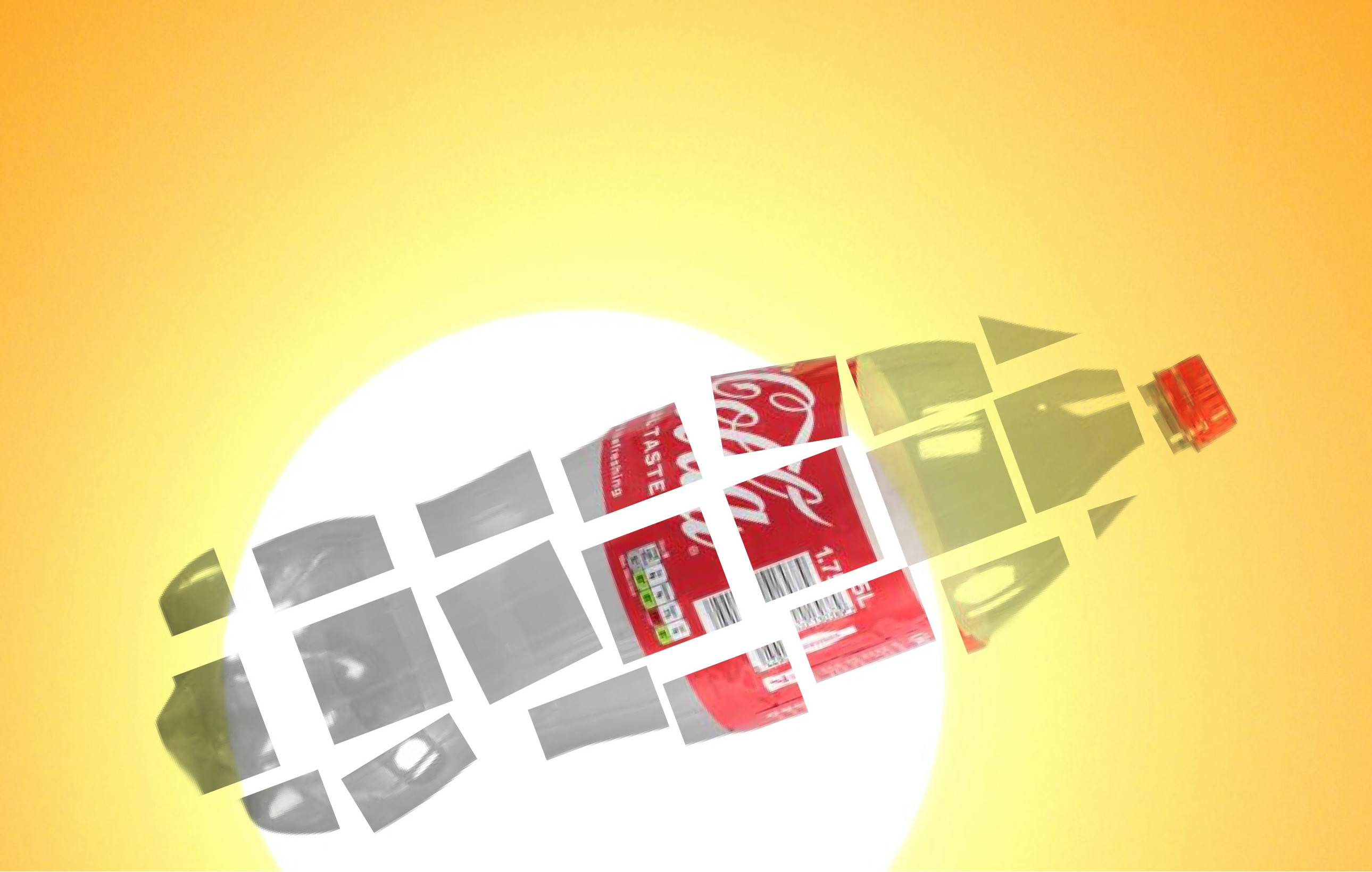
Australians produced 3.2 million tonnes (Mt) of plastic waste in 2023-2024, according to figures from the Department of Climate Change, Energy, the Environment and Water (DCCEEW). The vast majority of this waste (87%) went to landfill, and the remainder was sent to collection centres for sorting. Only 5.5% was ultimately reprocessed for local manufacturing. [1]
These figures highlight the fact that Australia’s sorting and reprocessing capacity is insufficient to handle the current accumulation of waste plastic. There are many different issues, particularly constraints in local policy, infrastructure and operations, as well as limitations in the technologies available for reprocessing mixed and/or contaminated plastic waste.
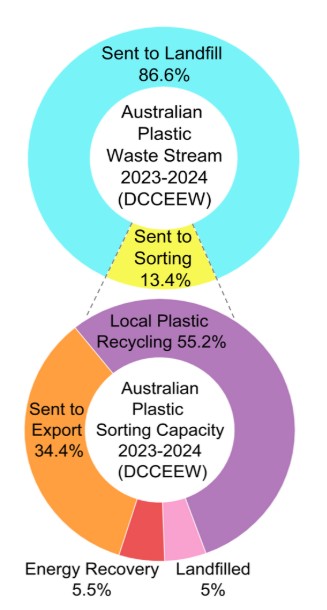
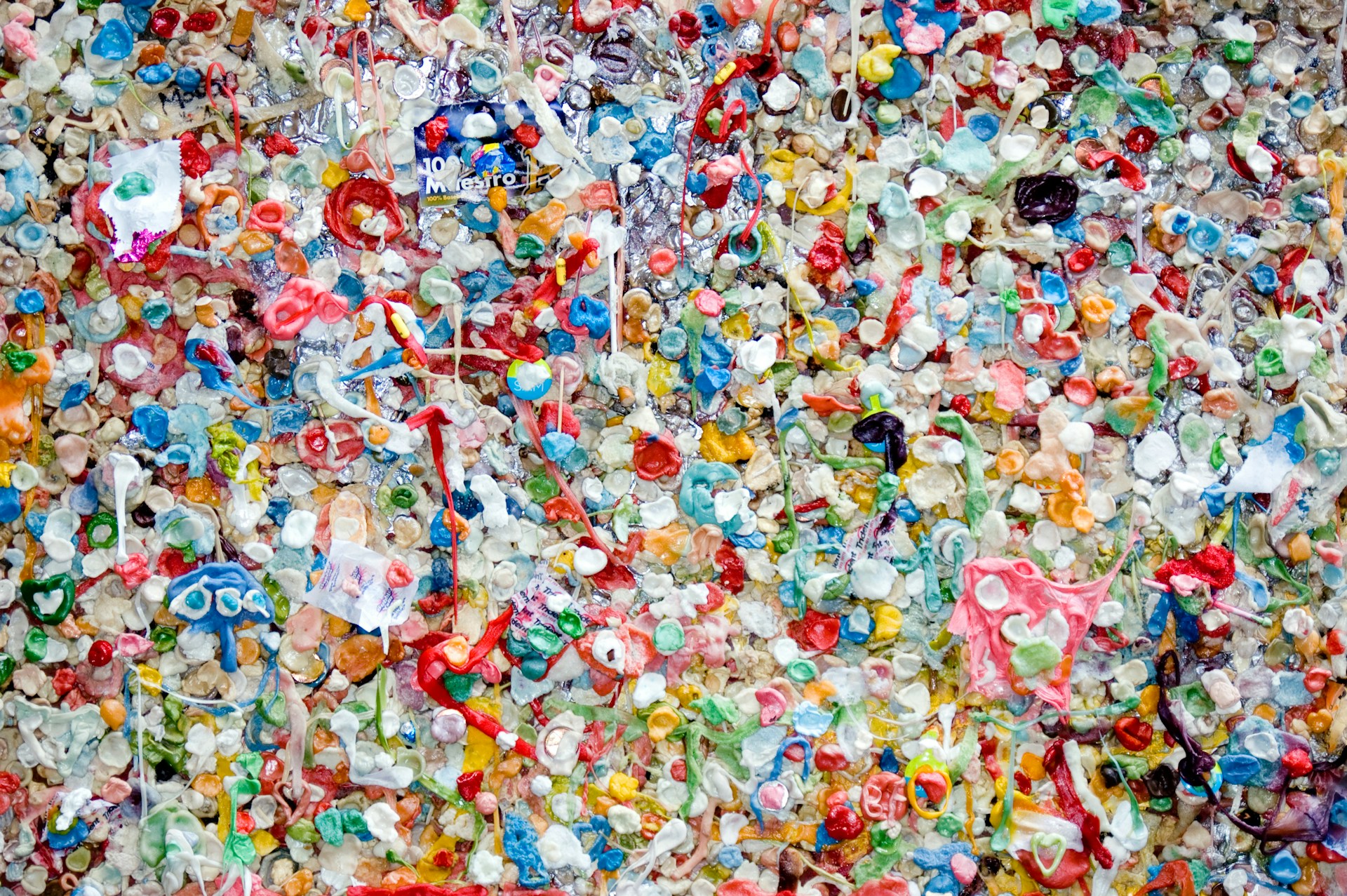
Unfortunately, over time, this pile-up of plastic waste has contributed to a multitude of problems: oversaturated landfills, mismanaged waste disposal, and Australia’s release of about 0.13 Mt of plastics into global ecosystems annually. Regardless of how dire the impacts of plastic pollution are, plastics are still an essential pillar of modern Australian society. Consumption is predicted to grow to 3.6 Mt in 2028-2029 with a reprocessing capacity gap of 64% sent to landfill.
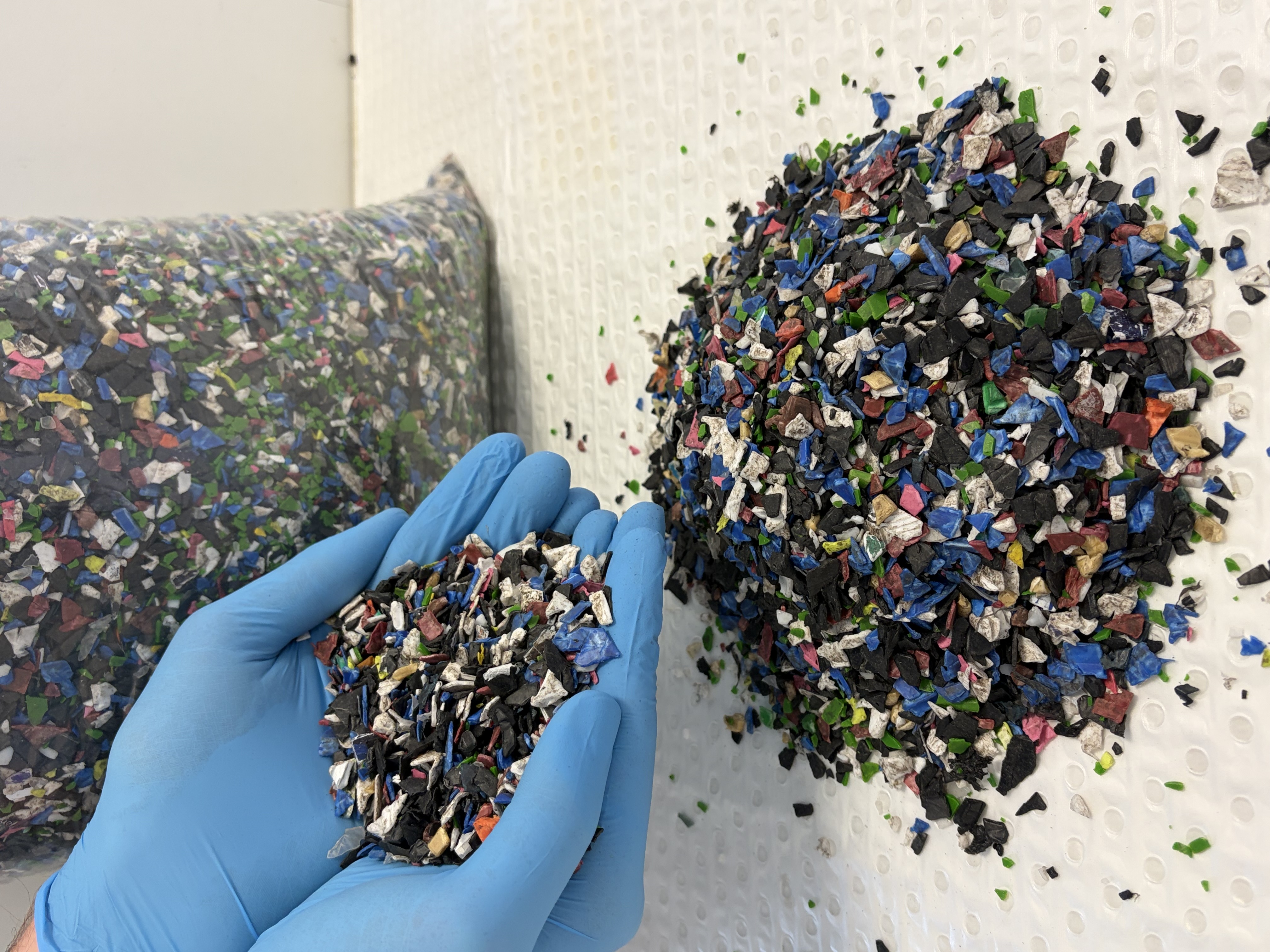
Thus, there is an urgency to address the limitations of the technologies we have to recover plastic. Many such technologies exist, but mechanical recycling surpasses all others at present in terms of being environmentally friendly, cost-effective, and providing the highest capacity for Australian industries to handle the various types of plastic waste. Unfortunately, mechanical recycling also produces the poorest quality plastic with the lowest resale price, due to contamination, the mixing of plastics and limitations of the extrusion process.
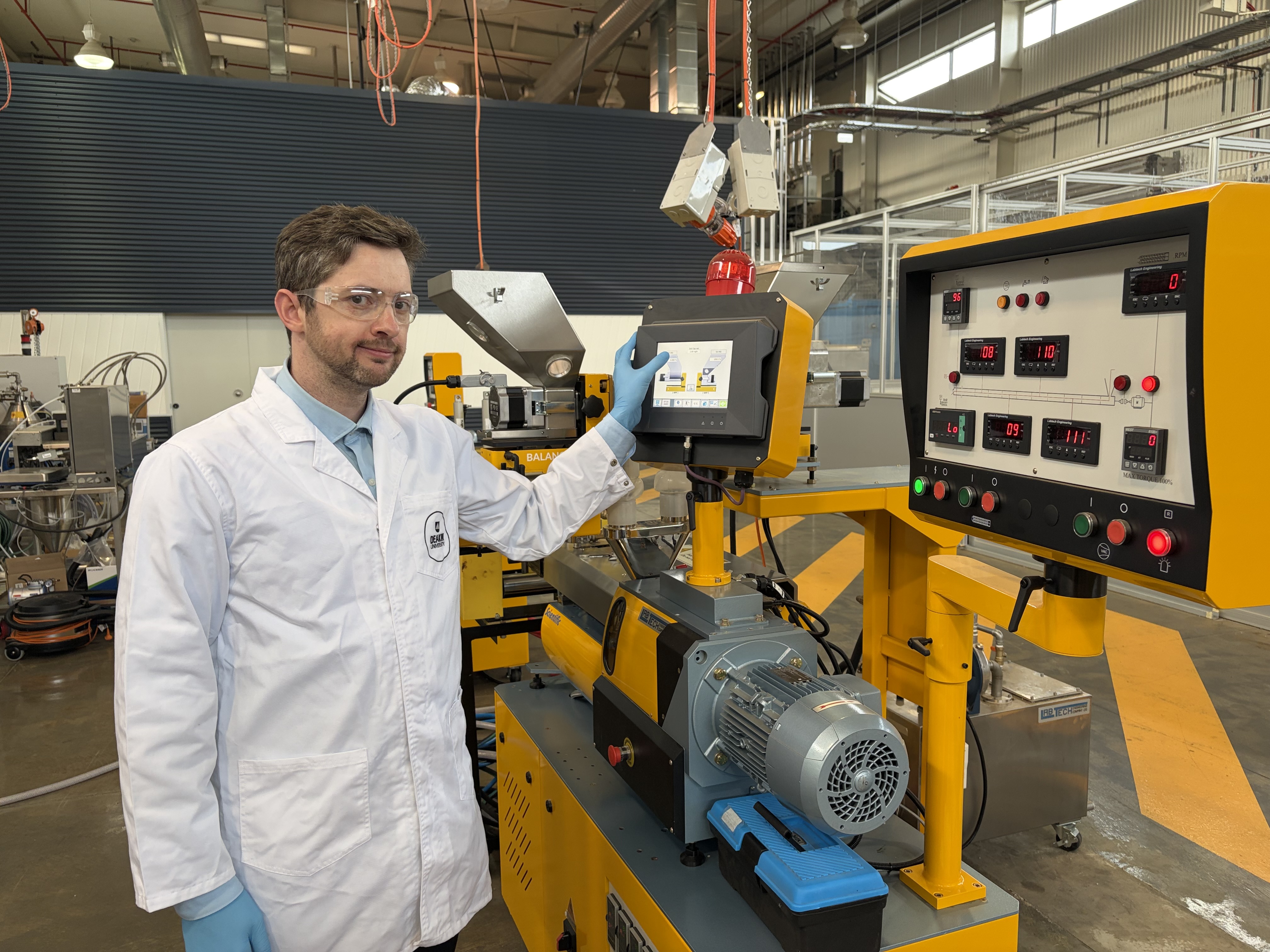
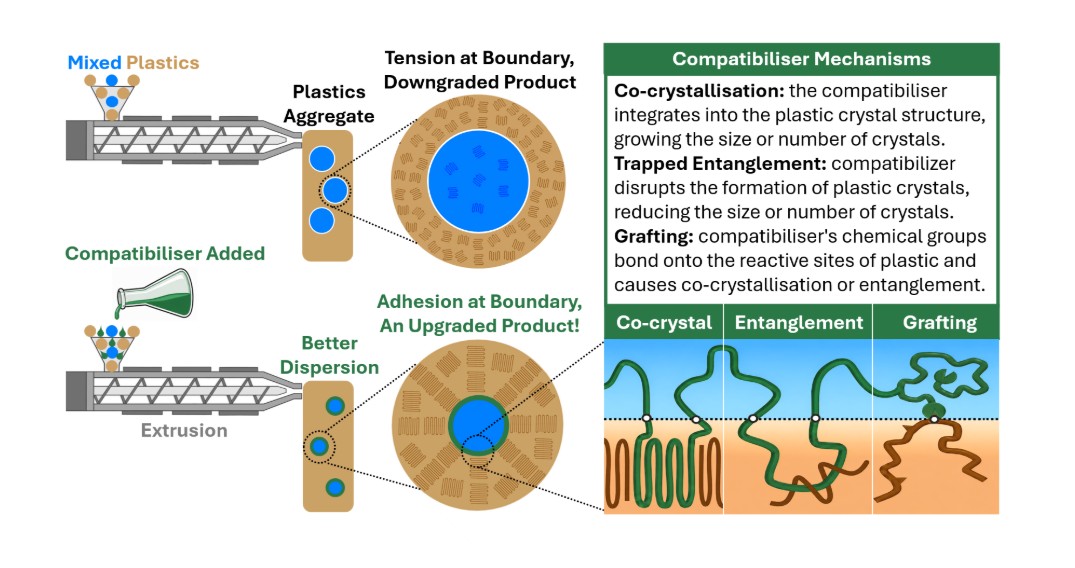
Extrusion is the most common way of mixing and reshaping plastic waste in mechanical recycling. Plastic granules are fed into a hopper. There, a rotating screw forces them forward into a heated barrel, where they are melted down and reformed. Direct extrusion of contaminated and/or mixed plastic waste often results in a lower quality product.
The limitations of mechanical recycling
There are various forms of contamination of waste streams and they can be difficult to remove from plastics. They include additives, food scraps, dyes and pigments, all of which cause reductions in the weight and quality of the recovered plastics. Moreover, the different melt-flow behaviours and the chemical properties of the various plastics in the mixed waste stream can heavily influence the compatibility of the individual components in the blend.
The degree of incompatibility can trigger high tension and poor adhesion at the boundary between regions of different plastic, as well as generating defects in the structure of the final product. This then results in low thermal stability and poor quality performance, all of which decreases the resale price.
Current industrial efforts to improve compatibility, material quality, and end-use performance rely on what are called compatibilisation technologies. A reactive compatibiliser is an additive that is combined with the mixed plastics feed during extrusion.
The reactive compatibiliser is attracted to the boundary between incompatible plastics during high-temperature mixing. There, it can help stabilise the shape, size, and distribution of the individual plastic components within the blended product, by promoting chemical bonds with reactive sites on one or both plastics. The selectivity of reactive compatibilisers depends on their melt flow behaviour and the chemical characteristics of the plastics within the blend.
The modifications reactive compatibilisers induce reduce the tension between the mixed plastics, leading to stronger adhesion between them. Moreover, there are multiple ways in which compatibilisers can improve the crystal stacking and alignment within the physical micro-nanostructure of the plastics. This results in the creation of a robust plastic alloy, which retains individual parent properties (thermal stability, etc.) while improving the overall mechanical performance to levels equivalent to or better than those of newly manufactured plastics. Furthermore, if compatibilisers are properly applied to the right plastic blend, they can also assist in negating the detrimental effects of contamination and mixed plastics, extending the end-of-life uses and preventing disposal in landfill.
The downsides of using commercial compatibilisers, such as glycidyl methacrylate, are that they are derived from fossil fuels by a process that is energy-intensive and expensive. They are also highly toxic and leach out of plastics into the surrounding environment, contributing to potentially deadly pollution. To address these problems, bio-based compatibilisers have recently been developed as an environmentally friendly and cheap alternative.
Bio-based compatibilisers: The solution?
Bio-based compatibilisers are derived from renewable biological sources, a key factor in their design. They allow us to enhance mixed plastic waste into an upgraded product without the compatibiliser degrading into harmful byproducts. Other factors that need to be considered when selecting and synthesising a bio-based compatibiliser are sustainability, affordability, practicality in industrial practices, and thermal stability during extrusion, as well as chemical, physical and melt flow properties. These all influence the individual plastic components in the final blended product.
At Deakin University's Institute of Frontier Materials, we are developing bio-based compatibilisers that can improve the processability, quality and performance of conventional plastics. The emerging bioplastics break down with composting.
We are also designing pure polyolefins that can be repeatedly reprocessed for different applications with minimal loss in quality.
Our research is aligned with and partially funded by the Solving Plastic Waste Cooperative Research Centre (SPW-CRC), a collaboration between universities, industries and the Australian government. The CRC has a shared goal to solve Australia’s plastic recycling problem through pioneering innovative solutions and helping to foster a sustainable circular economy for plastics in Australia.
Together, we are working on redesigning plastics and their additives to lessen sorting, extend end-of-life use and reduce the annual global cost of $1.5 trillion (US) in social and environmental damages from plastic waste pollution.
Want to hear more about leading applied research in Victoria's universities?
subscribe.rsv.org.au
References
[1] Department of Climate Change, Energy, the Environment and Water (2025) Australian plastics flows and fates reporting. https://www.dcceew.gov.au/environment/protection/waste/plastics-and-packaging/australian-plastic-flows-fates-reporting
Other articles of interest





Discover how you can join the society
Join The Royal Society of Victoria. From expert panels to unique events, we're your go-to for scientific engagement. Let's create something amazing.